
Imagine a manager telling a team, “Remote work and office work are two sides of the same coin.” The manager is not saying the two approaches are identical. Instead, the point is that they are closely connected and represent different aspects of the same broader issue.
The phrase “Two Sides of the Same Coin” is widely used when two people, ideas, situations, choices, or outcomes appear different but share an underlying connection. It is especially useful when you want to show balance, contrast, or interdependence without suggesting that one side is completely separate from the other.
In modern communication, choosing the right alternative matters. A professional email may benefit from a neutral expression such as “two aspects of the same issue.” At the same time, a casual conversation might sound more natural with “two sides of the same thing.” Understanding these subtle differences helps students, professionals, ESL learners, writers, and speakers communicate more precisely.
What Does “Two Sides of the Same Coin” Mean?
“Two sides of the same coin” describes two different aspects, perspectives, conditions, or outcomes that are closely connected because they belong to the same underlying situation. The phrase is commonly used when discussing contrasting ideas, complementary qualities, related advantages and disadvantages, or different ways of viewing the same problem in conversations, writing, business, and presentations.
Origin & History of “Two Sides of the Same Coin”
The expression comes from the physical design of a coin, which normally has two distinct faces that belong to one object. The two surfaces are different, but neither exists as a separate coin. English speakers eventually used this physical relationship as a figurative way to describe two contrasting or connected aspects of one subject.
The exact history of the modern idiom is less straightforward than the literal metaphor. Expressions comparing opposing or related things to different sides of an object have appeared in English for centuries. The specific “two sides of the same coin” formulation became increasingly established in modern English and is now common in journalism, business writing, education, politics, psychology, and everyday conversation.
Its meaning has also broadened. Earlier uses often emphasized contrast within a single situation, while contemporary speakers may use it for either contrasting or complementary relationships. For example, risk and opportunity can be described as two sides of the same coin, but so can creativity and problem-solving when they are presented as closely connected qualities.
Synonyms & Alternatives by Tone
Professional & Neutral Alternatives
- Two aspects of the same issue
- Two facets of the same matter
- Different sides of the same issue
- Two perspectives on the same matter
- Two dimensions of the same problem
- Related aspects of the same situation
- Different manifestations of the same underlying issue
Polite & Supportive Alternatives
- Two ways of looking at the same situation
- Different perspectives on the same matter
- Two related parts of the same situation
- Two complementary perspectives
- Different aspects of the same experience
Encouraging & Reassuring Alternatives
- Two parts of the same bigger picture
- Two complementary sides
- Different paths toward the same goal
- Connected parts of the same process
Casual, Playful & Idiomatic Alternatives
- Two sides of the same thing
- The flip side of the same issue
- Two ends of the same spectrum
- Two sides of the equation
- Different sides of the same story
- Two faces of the same situation
- Two angles on the same thing
When Should You Use “Two Sides of the Same Coin”?
Professional Settings
The phrase works well when explaining that two business strategies, workplace challenges, policies, or outcomes are closely connected.
For example:
“Employee autonomy and accountability are two sides of the same coin.”
This sentence communicates that greater freedom often needs to be accompanied by greater responsibility.
Casual Conversations
In everyday speech, the expression can make an explanation shorter and more natural.
“Being independent and asking for help can actually be two sides of the same coin.”
It allows the speaker to acknowledge an apparent contradiction without making the explanation unnecessarily complicated.
Writing, Presentations, and Digital Communication
The phrase is particularly useful in essays, presentations, blog posts, reports, newsletters, LinkedIn posts, and social media when a writer needs to connect two related ideas.
It can introduce a contrast:
“Technology brings convenience and new risks; they are two sides of the same coin.”
It can also introduce complementary ideas:
“Creativity and critical thinking are two sides of the same coin when solving complex problems.”
When It Is Especially Effective
Use the expression when:
- Two ideas are different but strongly connected.
- You want to acknowledge both sides of an issue.
- A situation has benefits and disadvantages.
- Two outcomes come from the same underlying cause.
- You want to sound balanced rather than overly one-sided.
- The audience is familiar with common English idioms.
When Should You Avoid “Two Sides of the Same Coin”?
Overly Formal Situations
In highly formal documents, direct wording may be clearer.
Instead of:
“These policies are two sides of the same coin.”
You could write:
“These policies address two related aspects of the same issue.”
The second version is more precise and less idiomatic.
Legal, Academic, or Sensitive Contexts
In legal documents and highly technical academic writing, idioms can introduce unnecessary ambiguity. A reader may need to know exactly how two concepts are related rather than simply being told that they are “two sides” of one issue.
Situations Where Nuance May Be Lost
The phrase can imply a stronger relationship than actually exists. If two issues merely happen to occur together, calling them “two sides of the same coin” may incorrectly suggest that they share one underlying cause or structure.
For sensitive subjects, it is also worth avoiding language that makes genuinely different experiences sound equivalent.
Is “Two Sides of the Same Coin” Professional, Polite, or Casual?
“Two sides of the same coin” is neutral to moderately conversational. It is not slang, and it is perfectly acceptable in professional communication, especially in meetings, presentations, articles, and general business discussions.
Its formality depends on context. In a presentation, it can sound polished and memorable. In a legal contract, however, it may be less suitable than precise descriptive language.
The phrase also carries a subtle balancing effect. It signals that the speaker recognizes more than one perspective. That can make an argument sound measured rather than aggressively one-sided.
However, context matters. Saying “failure and success are two sides of the same coin” can sound thoughtful in a motivational article, while saying the same thing about two highly sensitive personal experiences could appear dismissive.
Pros and Cons of Using “Two Sides of the Same Coin”
Advantages
- Clarity: It quickly communicates that two ideas are connected.
- Efficiency: A familiar idiom can replace a longer explanation.
- Accessibility: Most proficient English speakers understand it immediately.
- Balance: It can signal recognition of multiple perspectives.
- Memorability: The expression is easy to remember and visually understandable.
Potential Drawbacks
- Oversimplification: Complex issues may involve more than two meaningful aspects.
- Tone mismatch: An idiom may sound too conversational in highly formal writing.
- Repetition: Frequent use can make writing predictable.
- False equivalence: The phrase can make two unequal issues sound equally important.
- Ambiguity: It does not always explain exactly how the two ideas are connected.
Real-Life Examples of “Two Sides of the Same Coin” by Context
Emails
“Customer growth and customer support are two sides of the same coin. As our user base expands, we need to make sure our support capacity grows with it.”
This works because the writer connects two practical business functions.
Meetings
“Speed and accuracy can feel like competing priorities, but they’re often two sides of the same coin when we improve the process.”
The phrase helps a speaker reframe an apparent conflict.
Presentations
“Convenience and privacy are two sides of the same coin in today’s digital services.”
This is effective on a presentation slide because it summarizes a broader relationship memorably.
Conversations
“Being confident and being willing to admit you’re wrong are two sides of the same coin.”
The expression makes a potentially complex observation sound natural.
Social Media
“More freedom means more responsibility. They’re two sides of the same coin.”
This short format works particularly well in social media because the meaning is immediately accessible.
Common Mistakes & Misuse of “Two Sides of the Same Coin”
Overuse
Because the expression is familiar, repeatedly using it can make an article or presentation sound formulaic. Strong writers should vary the wording when the relationship between ideas changes.
Incorrect Context
Do not use the phrase simply because two things are mentioned together. The concepts should have a meaningful underlying relationship.
Incorrect:
“The office has new chairs and a new coffee machine. They are two sides of the same coin.”
There is no obvious conceptual connection.
Contradictory Usage
The expression can become confusing if the two things are completely unrelated or if the writer claims they are identical.
The phrase means different but connected, not “the same.”
Cultural Misunderstandings
Idioms can be less familiar to beginner-level English learners. In international communication, especially with a multilingual audience, a direct alternative such as “two related aspects of the same issue” may be easier to understand.
Psychological Reason People Prefer “Two Sides of the Same Coin”
Cognitive Load Reduction
Familiar expressions allow readers to process a relationship quickly. Instead of explaining every connection from scratch, the writer can use a recognizable phrase and then provide the specific explanation.
Trust and Authority Signals
Used appropriately, a familiar idiom can make communication sound confident and natural. However, an idiom alone does not create authority; the surrounding explanation must demonstrate sound reasoning.
Attention Economy
Modern readers often scan emails, articles, presentations, and social posts. Compact expressions can communicate a broad relationship without requiring a long opening explanation.
Modern Communication Habits
Digital communication favors concise language. A phrase like “two sides of the same coin” can work as a compact bridge between contrasting ideas, particularly when followed by a specific example.
US vs UK Usage of “Two Sides of the Same Coin”
The expression is well established in both American English and British English. There is no major difference in its core meaning.
In both varieties, it can describe two connected aspects of one situation. It appears in professional writing, journalism, education, public discussion, and everyday speech.
The main difference is not meaning but stylistic preference. Some highly formal British or American writing may prefer direct wording such as “two aspects of the same issue.” In ordinary professional communication, however, “two sides of the same coin” is widely understood in both varieties.
“Two Sides of the Same Coin” in Digital & Modern Communication
Emails
It can efficiently connect two related workplace concerns without requiring a lengthy explanation.
Slack / WhatsApp
The expression can sound natural in team chats when discussing trade-offs:
“Speed and testing are two sides of the same coin here.”
For very short messages, however, “They’re closely connected” may be even more direct.
Social Media
The phrase is particularly useful in short-form commentary because it creates an immediate contrast:
“Convenience and distraction can be two sides of the same coin.”
AI-Generated Summaries
AI-generated summaries frequently need to describe relationships between benefits and drawbacks. The phrase can be useful, but the summary should explain the exact connection rather than relying on the idiom alone.
For example:
“Automation can increase efficiency while changing job responsibilities; these are two related aspects of the same transformation.”
This is often clearer than repeatedly using an idiom.
Usage & Examples for Each Alternative
Two Aspects of the Same Issue
Meaning: “Two aspects of the same issue” refers to two distinct parts or dimensions of one broader problem or subject. Why This Phrase Works: It clearly shows connection without suggesting that the two aspects are equal, opposite, or identical. Real-World Usage Insight: This is one of the safest alternatives in professional and academic communication because its meaning is explicit. Best Use: Reports, workplace documents, essays, presentations, and formal explanations. Avoid When: You specifically want a vivid or conversational idiom. Tone: Professional, neutral, precise. US vs UK Usage: Natural in both American and British English. Example (Email / Message / Meeting): “The budget issue and staffing shortage are two aspects of the same issue, so I recommend that we address them together.”
Two Facets of the Same Matter
Meaning: “Two facets of the same matter” describes two distinct characteristics or dimensions of one subject. Why This Phrase Works: “Facets” suggests that the subject has several recognizable features. Real-World Usage Insight: It sounds polished without being excessively technical. Best Use: Reports, presentations, articles, and professional discussions. Avoid When: Writing for very young readers or beginner English learners. Tone: Polished, professional, moderately formal. US vs UK Usage: Well understood in both varieties. Example (Email / Message / Meeting): “Cost and customer experience are two facets of the same matter, so the proposal needs to consider both.”
Different Sides of the Same Issue
Meaning: This expression emphasizes different positions, aspects, or consequences associated with one issue. Why This Phrase Works: It is more direct than the original idiom while preserving the idea of contrast. Real-World Usage Insight: It works particularly well when a discussion includes competing viewpoints. Best Use: Debates, opinion pieces, meetings, and explanatory writing. Avoid When: The two elements are actually complementary rather than contrasting. Tone: Neutral, analytical, conversational. US vs UK Usage: Common and natural in both. Example (Email / Message / Meeting): “The meeting helped us understand the different sides of the same issue before we made a decision.”
Two Perspectives on the Same Matter
Meaning: This phrase means that two viewpoints or interpretations relate to the same subject. Why This Phrase Works: It clearly centers the idea of perspective rather than claiming that the underlying facts are identical. Real-World Usage Insight: It is especially useful when people disagree but are discussing the same underlying problem. Best Use: Meetings, mediation, management, education, and thoughtful discussion. Avoid When: You are describing objective parts of a process rather than viewpoints. Tone: Diplomatic, professional, balanced. US vs UK Usage: Equally natural in both. Example (Email / Message / Meeting): “We have two perspectives on the same matter, but I think we agree on the outcome we want.”
Two Dimensions of the Same Problem
Meaning: This phrase identifies two important dimensions or areas within one problem. Why This Phrase Works: It communicates complexity while keeping the relationship between the ideas clear. Real-World Usage Insight: It is particularly effective when a problem has operational, financial, social, or practical components. Best Use: Business reports, research, presentations, and strategy discussions. Avoid When: The audience prefers very simple conversational English. Tone: Analytical, professional, precise. US vs UK Usage: Common in both varieties. Example (Email / Message / Meeting): “The delay has two dimensions of the same problem: supplier capacity and internal scheduling.”
Related Aspects of the Same Situation
Meaning: This phrase describes different elements that are connected within one situation. Why This Phrase Works: It avoids implying that the elements are necessarily opposites. Real-World Usage Insight: It is useful when you want to sound careful and avoid overstatement. Best Use: Workplace communication, explanations, and sensitive discussions. Avoid When: You want a memorable idiomatic expression. Tone: Neutral, careful, professional. US vs UK Usage: Natural in both American and British English. Example (Email / Message / Meeting): “The customer complaint and the delivery delay are related aspects of the same situation.”
Two Ways of Looking at the Same Situation
Meaning: This expression presents two different ways of interpreting or understanding one situation. Why This Phrase Works: It is extremely accessible and avoids difficult vocabulary. Real-World Usage Insight: It is a strong choice for ESL learners and international teams. Best Use: Conversations, coaching, education, customer communication, and meetings. Avoid When: Highly formal documentation requires exact terminology. Tone: Friendly, accessible, neutral. US vs UK Usage: Widely natural in both. Example (Email / Message / Meeting): “I think our disagreement is really two ways of looking at the same situation.”
Different Perspectives on the Same Matter
Meaning: This phrase indicates that people or groups have different viewpoints about one subject. Why This Phrase Works: It separates disagreement in perspective from disagreement about every underlying fact. Real-World Usage Insight: It is useful for maintaining a respectful tone during disagreements. Best Use: Management, education, teamwork, conflict resolution, and professional writing. Avoid When: The issue involves two physical or operational components rather than viewpoints. Tone: Diplomatic and respectful. US vs UK Usage: Common in both. Example (Email / Message / Meeting): “We seem to have different perspectives on the same matter, so let’s review the customer feedback before deciding.”
Two Complementary Perspectives
Meaning: “Two complementary perspectives” describes viewpoints that differ but can work together to provide a fuller understanding. Why This Phrase Works: It emphasizes cooperation rather than opposition. Real-World Usage Insight: The word “complementary” is useful when neither perspective needs to defeat the other. Best Use: Teamwork, leadership, research, consulting, and presentations. Avoid When: The perspectives genuinely contradict one another. Tone: Positive, collaborative, professional. US vs UK Usage: Natural in both, although “complementary” may sound slightly more formal. Example (Email / Message / Meeting): “The designer and developer brought two complementary perspectives to the project.”
Two Parts of the Same Bigger Picture
Meaning: This phrase says that two elements become more understandable when viewed as parts of a broader situation. Why This Phrase Works: It encourages people to avoid looking at an issue in isolation. Real-World Usage Insight: It is particularly natural in coaching and explanatory conversations. Best Use: Meetings, leadership, education, and informal professional discussions. Avoid When: Writing highly formal legal or technical documents. Tone: Friendly, reassuring, conversational. US vs UK Usage: Natural in both. Example (Email / Message / Meeting): “Customer retention and customer satisfaction are two parts of the same bigger picture.”
Comparison Table of 10 Best Alternatives
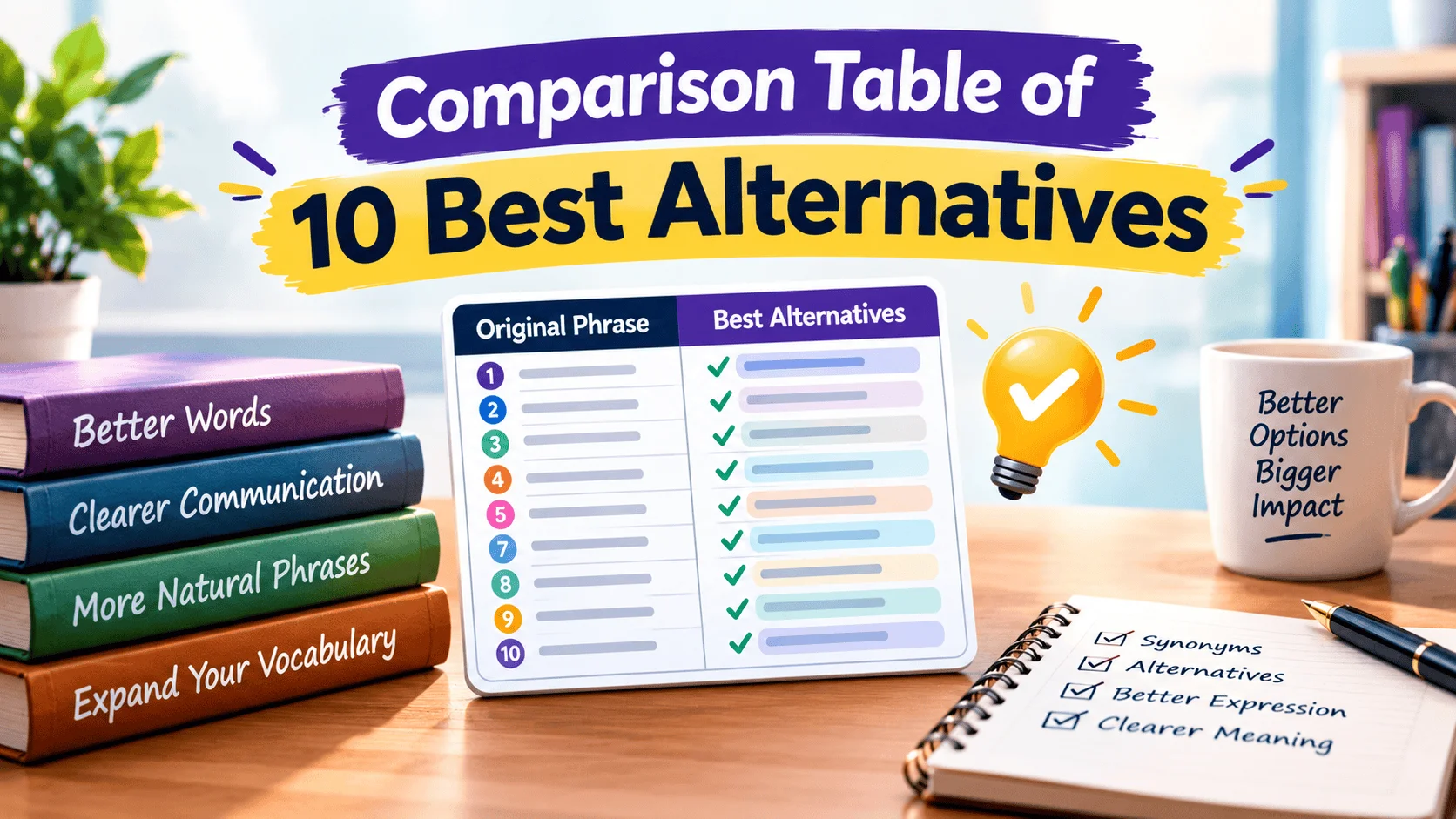
These ten alternatives cover the most useful professional, conversational, and analytical situations. The best choice depends on whether you want to emphasize connection, contrast, perspective, balance, or a shared goal.
| Phrase | Meaning | Best Use | Worst Use | Tone | US vs UK Usage |
| Two Aspects of the Same Issue | Two connected parts of one issue | Professional writing and reports | Highly casual conversation | Neutral, precise | Common in both |
| Two Facets of the Same Matter | Two characteristics of one subject | Formal explanations | Beginner-level writing | Polished, formal | Common in both |
| Different Sides of the Same Issue | Different aspects or positions | Debates and discussions | Unrelated subjects | Analytical, neutral | Common in both |
| Two Perspectives on the Same Matter | Different viewpoints | Meetings and conflict resolution | Physical or technical components | Diplomatic | Common in both |
| Two Dimensions of the Same Problem | Two important areas of one problem | Business and analysis | Very informal conversation | Analytical | Common in both |
| Two Ways of Looking at the Same Situation | Different interpretations | Conversations and coaching | Legal documents | Friendly, accessible | Common in both |
| Two Complementary Perspectives | Different viewpoints that work together | Teamwork and leadership | Directly opposing views | Collaborative | Common in both |
| Two Parts of the Same Bigger Picture | Connected elements within a wider context | Presentations and discussions | Formal contracts | Conversational | Common in both |
| Different Paths Toward the Same Goal | Different methods leading to one result | Strategy and teamwork | Different goals | Positive, encouraging | Common in both |
| The Flip Side of the Same Issue | A contrasting aspect or consequence | Blogs and informal communication | Highly formal writing | Casual, idiomatic | Common in both |
Conclusion:
“Two sides of the same coin” is a useful English idiom for describing two different but closely connected aspects of the same situation. Its familiar wording makes it easy to understand in everyday conversations, professional discussions, presentations, articles, and digital communication. The phrase can highlight contrast, shared causes, complementary qualities, or related outcomes without requiring a lengthy explanation. However, context remains important.
In formal, legal, academic, or highly sensitive writing, a more precise alternative such as “two aspects of the same issue” or “two perspectives on the same matter” may communicate the intended meaning more clearly. Understanding these differences helps writers and speakers choose language that matches their audience and purpose. Whether you are an ESL learner, student, professional, or content writer, knowing when to use “two sides of the same coin” can make your English sound more natural, balanced, and effective.
FAQs:
[faq_accordion]What does “two sides of the same coin” mean?
“Two sides of the same coin” means two different aspects, perspectives, or outcomes that are closely connected because they belong to the same underlying situation. The expression is often used when two things appear different but cannot be fully understood separately. For example, freedom and responsibility can be described as two sides of the same coin.
Is “two sides of the same coin” an idiom?
Yes, “two sides of the same coin” is a common English idiom. It uses the two physical faces of a coin as a comparison for two distinct but connected aspects of one situation. The expression is widely understood in American and British English and appears in everyday speech, professional communication, journalism, education, and online writing.
Is “two sides of the same coin” professional?
Yes, it can be professional, although it is somewhat conversational and figurative. It works naturally in meetings, presentations, business discussions, articles, and general workplace communication. For highly formal documents, legal writing, or technical reports, alternatives such as “two aspects of the same issue” may be preferable because they communicate the relationship more explicitly.
What is another way to say “two sides of the same coin”?
Useful alternatives include “two aspects of the same issue,” “two perspectives on the same matter,” “different sides of the same issue,” “two facets of the same matter,” and “two dimensions of the same problem.” The best choice depends on your intended meaning. For example, “two perspectives” is best when discussing viewpoints, while “two aspects” is more general.
Can “two sides of the same coin” describe positive and negative things?
Yes. The expression can describe a positive and a negative consequence that are closely connected. For example, “Technology and distraction can be two sides of the same coin.” However, the phrase does not necessarily mean one side is positive and the other negative. It simply indicates that two distinct elements are connected to the same underlying situation.
Is “two sides of the same coin” formal or informal?
The phrase is best described as neutral to moderately conversational. It is not slang and is acceptable in many professional situations, but it is more figurative than formal alternatives such as “two related aspects of the same issue.” Its suitability depends on the audience, subject, and level of precision required.
How do you use “two sides of the same coin” in a sentence?
You can use it after identifying two related ideas. For example: “Customer satisfaction and employee engagement are two sides of the same coin.” This structure shows that the two concepts are different but connected. It can also appear later in a sentence, such as: “These challenges are two sides of the same coin.”
What is the difference between “two sides of the same coin” and “two sides of the same story”?
“Two sides of the same coin” focuses on two connected aspects of one underlying situation. “Two sides of the same story” usually refers to different accounts, interpretations, or viewpoints about an event. Therefore, the first expression emphasizes connection, while the second often emphasizes disagreement about what happened or how an event should be understood.
Is “two sides of the same coin” common in American and British English?
Yes. “Two sides of the same coin” is familiar in both American and British English and has essentially the same meaning in each variety. Differences are mainly stylistic rather than grammatical. In both forms of English, the phrase can appear in conversations, professional discussions, journalism, presentations, essays, and online communication.
When should you avoid saying “two sides of the same coin”?
Avoid the phrase when the two things are unrelated, when their relationship requires precise technical explanation, or when the comparison could create a false equivalence. It may also be unsuitable for legal or highly formal academic writing. In those situations, direct wording such as “two related aspects of the issue” can reduce ambiguity and improve accuracy.
[/faq_accordion]